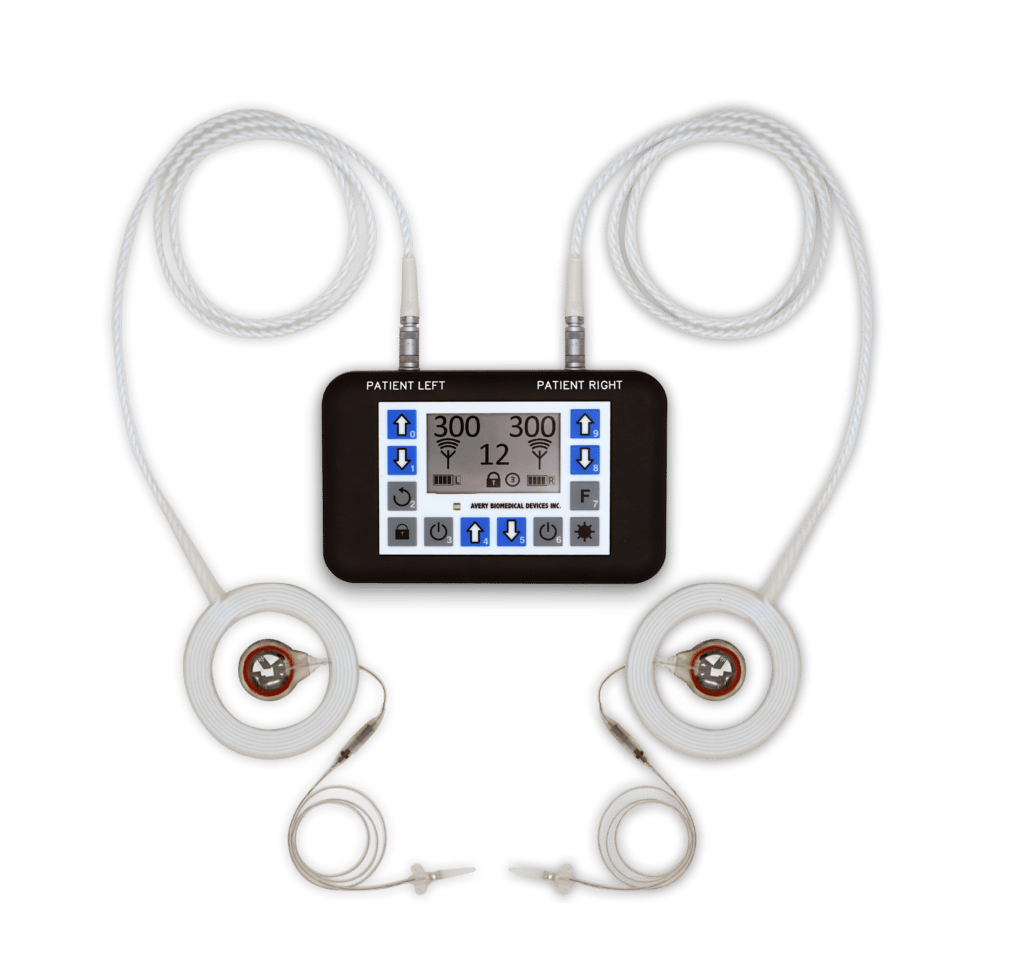
Bilateral Diaphragm Paralysis is the loss of control of both Hemidiaphragms caused by a traumatic injury or disease process which decreases or terminates the impulse of respiratory stimuli originating in the brain.
Until recently, most cases of diaphragm paralysis have most likely gone untreated. The Avery Diaphragm Pacemaker is a reliable solution for adult and pediatric patients who are chronically dependent on mechanical ventilation due to:
Central neurological disorders such as a brain or brainstem stroke
Syringomyelia or Poliomyelitis
Direct trauma to the phrenic nerve from surgery, radiation or tumor
Autoimmune diseases such as multiple sclerosis
Viral or bacterial infections such as meningitis
Diseases caused by insect bites such as Lyme Disease
Cervical stenosis
Bilateral phrenic nerve compression injury
Prospective candidates with conditions in which the phrenic nerves have completely degenerated (such as advanced ALS) or the diaphragm muscle has irreversibly atrophied (such as muscular dystrophy) are not suitable candidates for Diaphragm Pacing.
Pacemakers for Diaphragm Paralysis
Diaphragm Pacing is generally indicated for those prospective candidates who have functional lungs and diaphragm muscle and intact or repaired phrenic nerve(s).
To find out if you qualify for the Avery Diaphragm Pacing System or to find a physician or medical center, please Call or Contact Us below.
Life-Changing Benefits
Fewer Hospital Readmissions
Patients often experience fewer setbacks and hospital stays by avoiding common ventilator–related complications like VAP (ventilator- associated pneumonia) and VIDD (ventilator–induced diaphragm dysfunction).
Lower Risk of Infections
With less need for suctioning, no external ventilator tubing, and in some cases, removal of the tracheostomy, the risk of infection is significantly reduced.
Improved Circulatory Return
Negative–pressure breathing supports healthier circulation and helps the lungs function more efficiently than positive–pressure ventilation (PPV).
Proven Clinical Success
Studies have found quadriplegic patients maintained normal tidal volumes and arterial blood gases while pacing (Including 2002 study: Elefteriades et al., 2002).
Natural Breathing and Speech Patterns
With the Avery Diaphragm Pacemaker, users experience ease of eating, drinking, and speaking.
Discreet Design, Silent Operation
The Avery device is small, quiet, and portable. Many patients can live at home, reducing or eliminating the need for bulky ventilators and disposable supplies – significantly lowering long–term care costs.