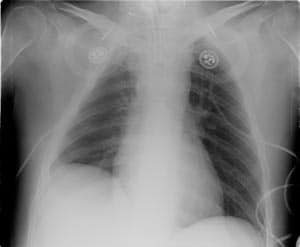
Closeup of a chest X-Ray showing elevated right hemidiaphragm
What is Diaphragm Paralysis?
Diaphragm Paralysis is the loss of control of one or both Hemidiaphragms caused by a traumatic injury or disease process which decreases or terminates the impulse of respiratory stimuli originating in the brain. Causes of Diaphragm Paralysis include, but are not limited to:
Central neurological disorders such as a brain or brainstem stroke
Syringomyelia or Poliomyelitis
Direct trauma to the phrenic nerve from surgery, radiation or tumor
Autoimmune diseases such as multiple sclerosis
Viral or bacterial infections such as meningitis
Diseases caused by insect bites such as Lyme Disease
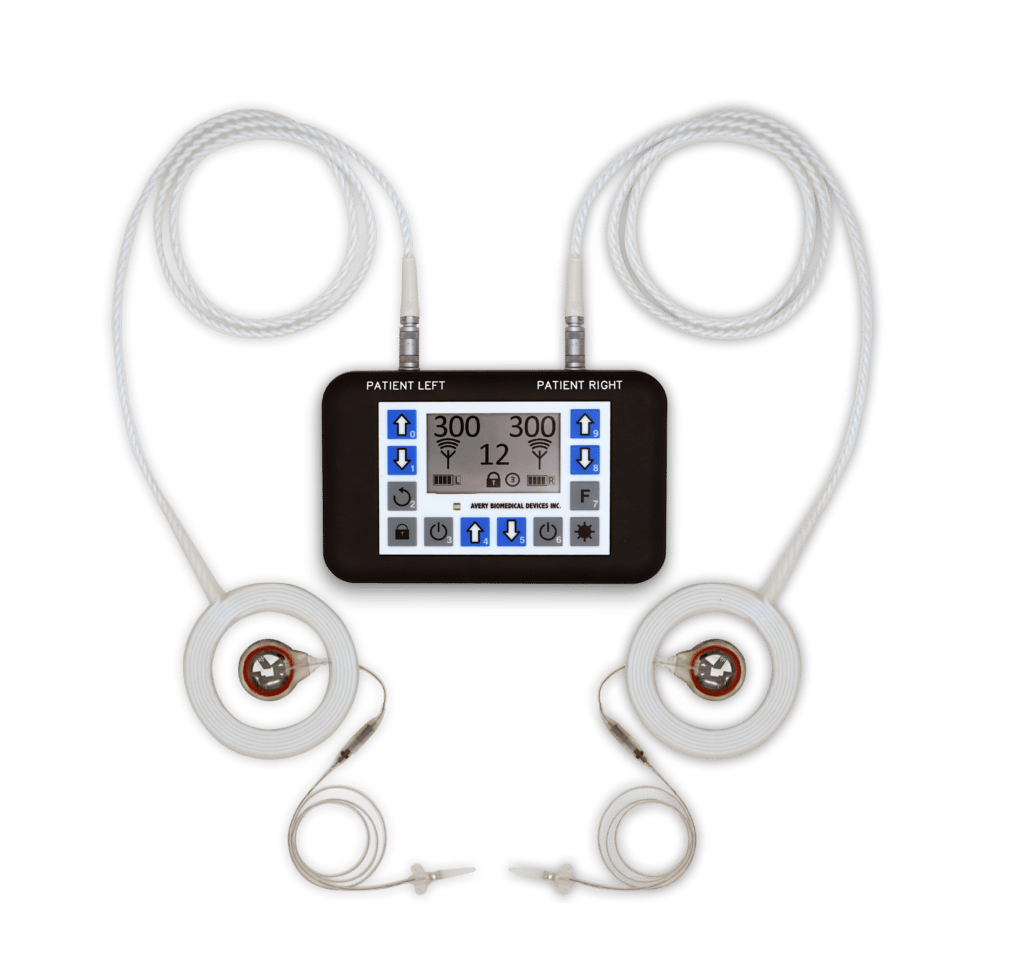
Pacemakers for Diaphragm Paralysis
Diaphragm Pacing is generally indicated for those prospective candidates who have functional lungs and diaphragm muscle and intact or repaired phrenic nerve(s).
Prospective candidates with diseases in which the phrenic nerves have completely degenerated, such as advanced ALS, or the diaphragm muscle has irreversibly atrophied, such as muscular dystrophy, are not suitable candidates for Diaphragm Pacing.
To find out if you qualify for the Avery Diaphragm Pacing System or to find a physician or medical center, please Call or Contact Us below.
Is Avery for Me?
The Avery Diaphragm Pacing System is indicated for adult and pediatric patients who would otherwise be dependent on mechanical ventilation. Intact or repaired phrenic nerves and functional lungs and diaphragm muscles are necessary for the device to work properly.
Individuals who require chronic ventilatory support because of upper motor neuron respiratory muscle paralysis (RMP) or because of central alveolar hypoventilation (CAH) and whose remaining phrenic nerve, lung and diaphragm function is sufficient to accommodate electrical stimulation may be eligible for an Avery System evaluation.