
Spinal Cord Injury
Spinal Cord Injury
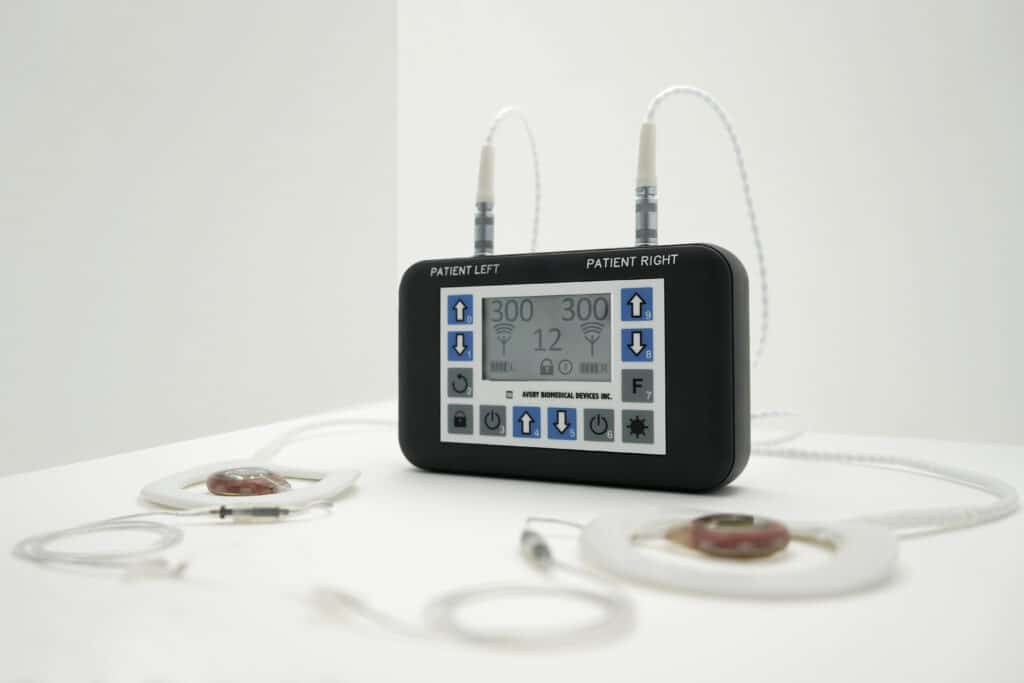
The Avery Diaphragm Pacemaker is a reliable solution for adult and pediatric patients who are chronically dependent on mechanical ventilation due to:
By stimulating the phrenic nerve, the Avery device enables more natural breathing for up to 24 hours a day.
The Avery Diaphragm Pacing System is indicated for persons who require chronic ventilatory support because of upper motor neuron respiratory muscle paralysis (RMP) or because of central alveolar hypoventilation (CAH) and whose remaining phrenic nerve, lung and diaphragm function whose sufficient to accommodate electrical stimulation.
Candidates for Diaphragm Pacing include, but are not limited to those with:

Brodie, Pacing Since 1980.
How does the Avery Diaphragm Pacemaker compare to the competitor device for Spinal Cord Injury?
Tetraplegia is the loss of voluntary movement and sensation in all four extremities, and usually results from a cervical Spinal Cord Injury (SCI). Other conditions, such as a brain stem lesion or spinal meningitis, may also result in Tetraplegia which is also known as Quadriplegia.
An SCI can be complete or incomplete. The term incomplete indicates that the patient has some sensory or motor function below the injury level. There are seven cervical vertebrae and eight cervical nerves, identified as C1 through C8. The level of injury directly correlates to the patients abilities and needs.
The phrenic nerve originates at C3 through C5 and is the neurological pathway between the brain and the diaphragm. Injuries that occur at or above C4 can interrupt these pathways and render the patient ventilatory dependent. After the patient is neurologically and orthopedically stable and cannot be weaned from mechanical ventilation, an Avery Diaphragm Pacing System should be considered.
The Avery Diaphragm Pacemaker (phrenic nerve stimulator) is indicated for adult and pediatric patients who require chronic ventilatory support because of upper motor neuron respiratory muscle paralysis (RMP) or because of central alveolar hypoventilation (CAH) and whose remaining phrenic nerve, lung and diaphragm function is sufficient to accommodate electrical stimulation.
The Avery Diaphragm Pacing System has full FDA PMA approval (FDA PMA P860026) and is covered by Medicare and most private and government insurances.