Unilateral Diaphragm Paralysis is the loss of control of either the left or right Hemidiaphragm caused by a traumatic injury or disease process which decreases or terminates the impulse of respiratory stimuli originating in the brain.
Unilateral diaphragm paralysis is most commonly caused by trauma or damage to the phrenic nerve during surgery (especially cardiac or thoracic), cervical spine disorders, or injury. Other causes include cancer (lung, lymph nodes), certain neuromuscular diseases (like ALS or multiple sclerosis), and some inflammatory or infectious processes. In many cases, the exact cause cannot be identified, a condition known as idiopathic paralysis.
Common Causes of Unilateral Diaphragm Paralysis
Causes Related to Nerve Damage or Injury
Surgical trauma: Most often after cardiac bypass or thoracic surgery, especially on the left side.
Cervical spine disorders: Neck arthritis or degeneration can affect phrenic nerve function.
Trauma: Blunt or penetrating injuries to the neck or chest.
Birth trauma: Nerve injury or developmental issues during delivery.
Causes Related to Disease or Inflammation
Cancer: Tumors in the lung or lymph nodes can compress or invade the phrenic nerve.
Neuromuscular diseases: Conditions such as amyotrophic lateral sclerosis (ALS), multiple sclerosis, and muscular dystrophy can lead to paralysis.
Inflammatory/infectious diseases: Systemic diseases, viruses, or other infections can sometimes cause inflammation of the phrenic nerve.
Other nerve disorders: Conditions like neuralgic amyotrophy can also be a cause.
Other Causes
Idiopathic: In a significant number of cases, no specific cause can be found.
Nerve blocks: The spread of local anesthetic during certain nerve blocks can affect the phrenic nerve.
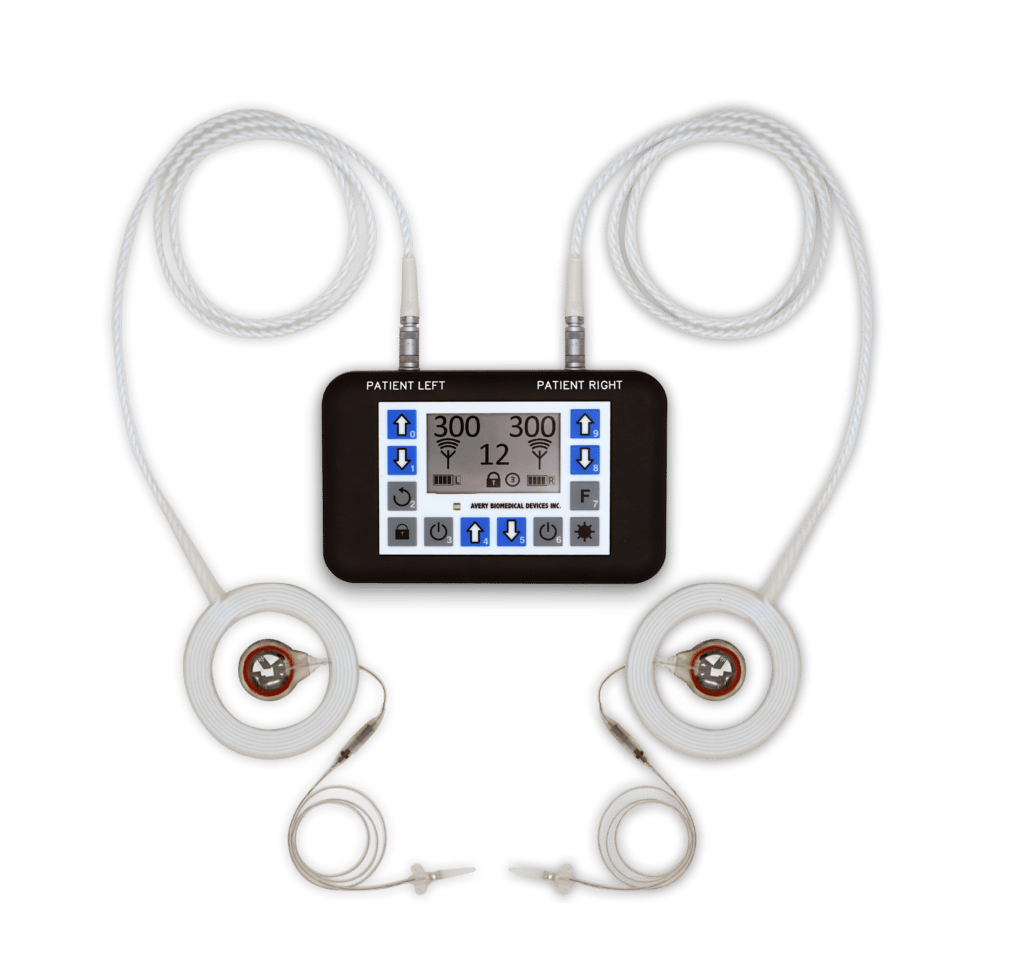
Diaphragm Pacing is generally indicated for those prospective candidates who have functional lungs and diaphragm muscle and intact or repaired phrenic nerve(s).
Improved quality of life with the Avery Diaphragm Pacemaker
Diaphragm Pacing is generally indicated for those prospective candidates who have functional lungs and diaphragm muscle and intact or repaired phrenic nerve(s).
Prospective candidates with diseases in which the phrenic nerves have completely degenerated, such as advanced ALS, or the diaphragm muscle has irreversibly atrophied, such as muscular dystrophy, are not suitable candidates for Diaphragm Pacing.
To find out if you qualify for the Avery Diaphragm Pacing System or to find a physician or medical center, please Call or Contact Us below.
Monica, Pacing Since 2015
Patient testimonials
“The [Avery] pacer has changed my life because I can now breathe better with two lungs versus one!”
Monica exercises, travels (including trips to Japan and Bali), and has recently walked a 5k for the first time in 3 years!